
The New Status Quo
How Deceptive narratives Shaped the 2024 Election and the Future of Voting

Key Findings
Out of the more than 150 distinct claims documented during our two-month research period, 64 percent related to state-level mis- and disinformation narratives.

The effects of election mis- and disinformation are racialized: communities of color are often immediate targets, then disproportionately disenfranchised by resulting policies.

“Great replacement” and noncitizen voting conspiracy theories — paired with accusations of Democrat coordination — were among the most prominent of documented claims.

Many of the actors, relationships and narratives established in the 2020 and 2022 elections continued to play an outsized role in amplifying election mis- and disinformation.



“Although white nationalist conspiracy theories related to immigration are not new — nor are the aims to criminalize, exploit, detain, and deport — the consolidation of these claims into the larger mass voter fraud narrative was unique about this election cycle.”
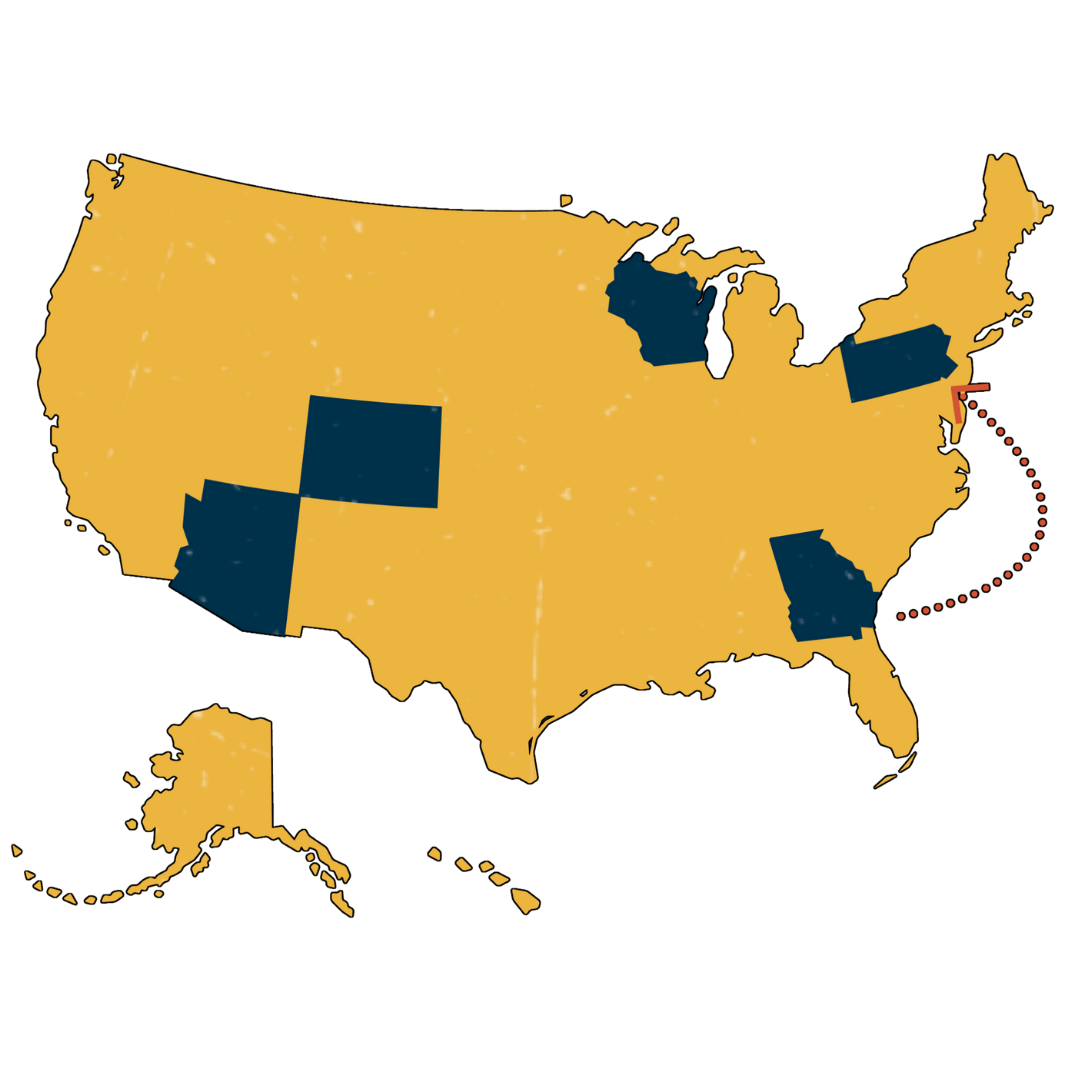
Disinformation Follows Political Stakes
During the early weeks of our research period, Georgia was the top state where our team flagged the most mis- and disinformative claims, likely because of the state’s political value and its concentration of Black voters.
As election day approached and Pennsylvania became a more contested battleground, we observed the volume of documented claims shift to this state and away from Georgia.
Recommendations
Advocates and Organizers: Mobilize against election-conspiracy-theory-fueled restrictive legislation in the courts, in policy, and public spheres, connecting the push for these laws to racialized efforts to disenfranchise voters by invoking election mis- and disinformation. These policies include: voter identification requirements, mandatory proof of citizenship, the abolition of mail-in voting, the shuttering of drop boxes, and more.
Funders and Philanthropists: Commit to funding projects and programs that curb the tide of authoritarianism within civic life and combat the disruption of timely and relevant information. Moments of civic participation have become flashpoints for mainstreaming mis- and disinformation, so these processes and the infrastructure that supports them must have adequate funding and support from civil society advocates, organizers, and other experts.
Journalists and Newsrooms: Avoid ceding to appeals for superficial “neutrality.” Often this results in false balance, which not only diminishes the factual soundness of your reporting, but also allows for the weaponization of your work to normalize, legitimize, and amplify extremist ideas and actors. Prioritize clarity and accuracy for your audience and avoid obfuscating issues with bothsidesisms.
Lawmakers and Elected Officials: Reign in the consolidation of media and tech companies, both of which monopolize the delivery and diversity of information to voters. For local media, challenge private equity’s role in the sector and provide tax incentives to promote higher pay, more hiring and retention. Consider a digital ads tax to support local journalism. For tech companies in particular, implement digital civil rights that would give users control over their data and secure their digital privacy.
Read the full report
If you found this report useful or want to get to know more about our work, get in touch.
© 2026 Disinfo Defense League. A project of Media Democracy Fund, strengthening democracy and shaping technologies that serve rather than extract from people and the planet.